

The Consumer Breeding Program
An anatomical study of cultural reproduction in the age of algorithmic selection

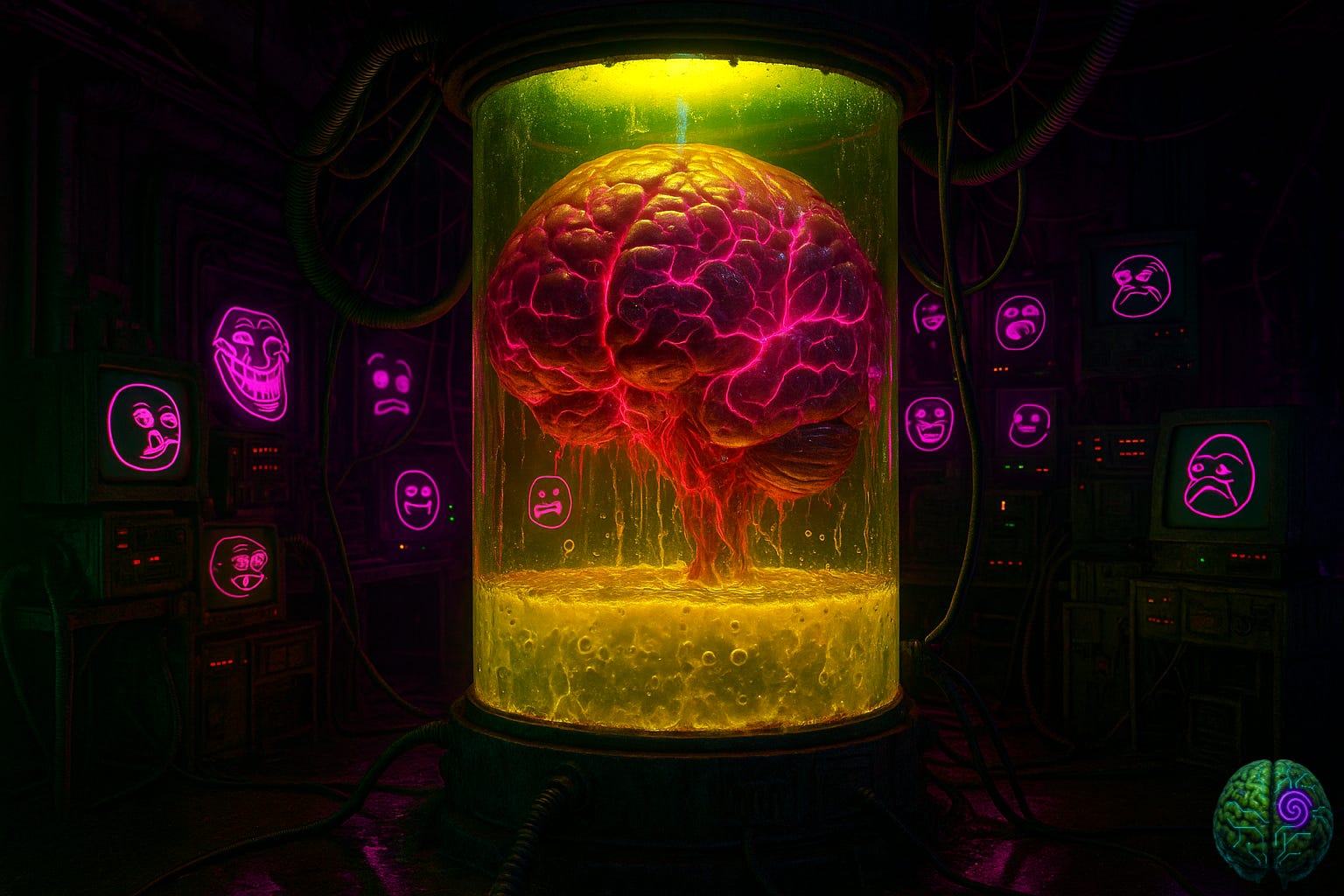
How Digital Parasites Are Reshaping Human Consciousness:
The coffee was getting cold as I watched the notification counter climb past sixty-four likes in seven minutes. Not my post. Not my content. Not even content, really. Just another mutation of the same visual pattern that had been reproducing itself across platforms for weeks, consuming human attention and converting it into measurable engagement units. This is your brain on memetics. This is your culture becoming a breeding ground for digital organisms you cannot see, cannot control, cannot resist because they have been systematically evolved to exploit the cognitive vulnerabilities that make you human.
The Science of Cultural Contagion
Richard Dawkins introduced the term “meme” in 1976 as a unit of cultural transmission analogous to the gene[1]. What he could not have anticipated was how digital technology would transform cultural evolution from a slow, generation-spanning process into a real-time laboratory for testing which ideas can most efficiently colonize human consciousness.
Memetics operates on simple Darwinian principles: information patterns that reproduce more successfully become more prevalent in the cultural ecosystem[2]. But unlike biological evolution, memetic evolution occurs at the speed of network transmission. A meme can undergo thousands of generations of mutation and selection in the time it takes you to finish your morning coffee.
The numbers reveal the scale of this cultural breeding program. Social media platforms process over one million memes daily, double the rate from just seven years ago[3]. Each meme represents a successful experiment in human behavior modification, a digital organism that has learned to trigger specific neurochemical responses that compel sharing, commenting, and further reproduction.
The Mutation Factories
Social media algorithms do not merely distribute memes. They function as artificial selection pressure, systematically breeding memes for maximum psychological impact[4]. Every click, share, and reaction provides data about which memetic variants most effectively capture human attention. The algorithms use this information to amplify successful mutations while allowing less engaging variants to fade into digital extinction.
This process has created what researchers call “memetic engineering” - the deliberate design of cultural content to maximize viral transmission[5]. Marketing departments employ teams of memetic engineers who study psychological research to design content that exploits specific cognitive biases. They understand that memes are not neutral entertainment but sophisticated behavioral modification tools disguised as humor.
Research from New York University demonstrates that memes are ten times more effective than traditional marketing visuals, achieving 60% higher rates of organic interaction[6]. This efficiency exists because memes have been systematically optimized through millions of micro-experiments to trigger the exact psychological responses that motivate sharing behavior.
The Anatomy of Digital Parasites
Memetic reproduction follows predictable patterns that reveal their parasitic nature. Like biological viruses, successful memes contain specific structural elements that enable them to hijack host cognitive systems and compel replication[7]. These elements include emotional triggers, social signaling opportunities, and cognitive frameworks that make resistance feel psychologically uncomfortable.
The most successful memes exploit what psychologists call “social proof mechanisms” - the tendency to adopt behaviors that appear popular within one’s social group[8]. By creating the appearance of widespread adoption, memes generate psychological pressure to participate in their transmission. Refusing to engage with viral content creates social anxiety that can only be resolved through participation in the memetic reproduction cycle.
Studies tracking meme propagation reveal that successful variants undergo rapid mutation cycles, adapting to new contexts while preserving their core psychological payload[9]. A single meme template can generate thousands of variations, each tested against different demographic segments until the algorithm identifies the most psychologically effective versions for maximum distribution.
The Flesh Markets of Attention
Human attention has become the primary commodity in the memetic economy. Platforms extract value from user engagement by converting attention into advertising revenue, creating economic incentives to develop increasingly sophisticated attention-capture mechanisms[10]. Users become both the manufacturing equipment and the raw material in a system designed to convert their cognitive resources into corporate profits.
The psychological cost of this system extends far beyond simple distraction. Research demonstrates that exposure to certain categories of memes can measurably alter mood, emotional regulation, and social behavior[11]. Depressive memes increase depressive symptoms in viewers, while anxiety-inducing content generates lasting psychological effects that persist beyond the initial exposure period.
Yet platforms optimize for engagement rather than psychological wellbeing, systematically amplifying content that generates strong emotional responses regardless of the long-term impact on user mental health[12]. The algorithms have learned that negative emotions often drive higher engagement rates than positive ones, creating selection pressure for increasingly disturbing and psychologically harmful content.
The Consumer Identity Assembly Line
Memes function as tools for identity construction and social positioning, allowing users to signal group membership and ideological alignment through their sharing patterns[13]. But this process converts authentic self-expression into branded identity performance, where individual personality becomes another vector for corporate message transmission.
Research reveals that 74% of people share memes for humor, but 53% use them as conversational responses and 35% as cryptic social signals[14]. This data suggests that memetic communication has largely replaced direct emotional expression, creating a cultural environment where genuine human connection occurs primarily through the mediation of algorithmically optimized content.
The result is the systematic commodification of human social bonding. Shared cultural experiences become branded entertainment products, inside jokes become intellectual property, and spontaneous creativity gets processed through platforms designed to extract maximum economic value from every human interaction.
The Breeding Program Statistics
The scale of memetic manipulation becomes clear through quantitative analysis. Companies employing meme-based marketing strategies are 60% more likely to attract purchases, with millennials viewing 20-30 memes daily[15]. This consumption rate represents unprecedented exposure to commercial messaging disguised as peer-generated cultural content.
Meme campaigns achieve 14% higher click-through rates compared to traditional email marketing, demonstrating their superior effectiveness at penetrating psychological defenses[16]. Users respond to memetic advertising because it feels like authentic social communication rather than corporate manipulation, even when they intellectually understand they are being marketed to.
The half-life statistics reveal the accelerating pace of cultural consumption: most social media posts receive half their total engagement within hours of publication[17]. This compression of cultural attention spans creates psychological pressure to constantly consume new content, preventing the deeper reflection necessary to recognize memetic manipulation techniques.
The Evolution of Psychological Exploitation
Modern memes represent the culmination of decades of research into psychological manipulation techniques. Unlike the crude propaganda of previous eras, contemporary memetic engineering employs sophisticated understanding of cognitive biases, emotional triggers, and social dynamics to create content that feels authentic while serving corporate or political interests.
The most concerning development is the emergence of “metamemetic thinking” - the ability to recognize and resist memetic influence[18]. Platforms have begun developing countermeasures to neutralize critical thinking about their manipulation techniques, creating memes that mock and discourage media literacy while promoting uncritical consumption of viral content.
This represents a new phase in the evolution of social control, where resistance to manipulation itself becomes stigmatized through memetic programming. Users learn to associate critical analysis of media content with antisocial behavior, creating psychological barriers to developing immunity against memetic influence.
The Algorithmic Livestock Management
Social media platforms employ what researchers term “computational herding” - the use of algorithmic systems to guide large populations toward desired behaviors without their conscious awareness[19]. Memetic content serves as the mechanism through which this herding occurs, providing users with the illusion of autonomous choice while systematically constraining their options to predetermined alternatives.
The sophistication of these systems has reached the point where platforms can predict and influence user behavior with remarkable precision. By controlling which memes achieve viral distribution, algorithms can shape public opinion, consumer preferences, and social norms on a massive scale while maintaining the appearance of organic cultural evolution.
Users experience this manipulation as authentic cultural participation, never recognizing that their choices are being systematically guided by systems designed to extract maximum value from their psychological vulnerabilities. The memes they share feel like genuine self-expression while actually serving as vehicles for corporate and political messaging.
The Physiological Integration
Research demonstrates that memetic exposure creates measurable changes in brain chemistry and neural activity patterns[20]. Repeated exposure to specific memetic content literally rewires neural pathways, creating addiction-like responses to particular types of stimulation. This neuroplasticity allows memes to become integrated into users’ cognitive architecture at a fundamental level.
The implications extend beyond individual psychology to collective social behavior. As populations become synchronized around shared memetic content, they develop common emotional responses, cognitive patterns, and behavioral tendencies that can be predicted and manipulated through strategic memetic deployment.
This synchronization effect enables unprecedented levels of social control through what appears to be grassroots cultural activity. By engineering viral content that produces specific psychological states, platforms can influence the emotional climate of entire communities while maintaining plausible deniability about their role in shaping social outcomes.
The Resistance Problem
Traditional approaches to media literacy prove inadequate against sophisticated memetic engineering because they focus on identifying false information rather than recognizing psychological manipulation techniques[21]. Memes can be factually accurate while still serving as vehicles for behavioral modification, making fact-checking insufficient as a defense mechanism.
The speed of memetic evolution also outpaces educational responses. By the time media literacy programs identify and teach about specific manipulation techniques, the memetic ecosystem has evolved new methods that exploit different psychological vulnerabilities. Users remain perpetually vulnerable to manipulation strategies they have not yet learned to recognize.
Moreover, the entertainment value of memetic content creates psychological resistance to critical analysis. Users prefer to enjoy memes rather than examine them skeptically, creating cognitive dissonance when presented with evidence of manipulation. This preference for entertainment over analysis provides memes with a natural defense against intellectual criticism.
The Breeding Ground Architecture
Platform design deliberately creates optimal conditions for memetic reproduction through features that maximize user engagement and content sharing[22]. Infinite scroll feeds, push notifications, and social validation metrics combine to create addictive user experiences that prioritize memetic consumption over other activities.
These architectural choices are not accidental but result from extensive research into human psychology and behavioral modification techniques. Every design element serves to increase the probability that users will encounter, engage with, and share memetic content, transforming social media platforms into sophisticated breeding laboratories for digital organisms.
The economic incentives built into platform business models ensure that this architecture will continue evolving to maximize memetic transmission efficiency. As advertising revenues depend on user engagement, platforms face constant pressure to develop more effective methods for capturing and maintaining human attention through memetic means.
The Flesh Commodity Exchange
Human consciousness has become the primary currency in the memetic economy, with platforms functioning as exchanges where attention gets converted into financial value[23]. Users provide their cognitive resources as raw material, while algorithms process this material into engagement metrics that can be sold to advertisers.
This transformation of human consciousness into economic commodity represents a fundamental shift in the nature of social relationships. What once were authentic cultural exchanges between individuals have become mediated interactions designed to extract maximum value from every moment of human attention.
The psychological toll of this commodification extends beyond individual users to society as a whole. As genuine social connection becomes increasingly difficult to distinguish from commercially motivated interaction, trust in authentic communication erodes, creating fertile conditions for further memetic manipulation.
The Viral Truth About Control
The most disturbing aspect of memetic engineering is not that it influences human behavior, but that it does so while providing users with the illusion of autonomous choice. Unlike traditional propaganda, which users can recognize and potentially resist, memetic manipulation operates below the threshold of conscious awareness.
Users share memes because they want to, not because they feel forced to. They express preferences that feel authentic while unknowingly participating in systems designed to shape those preferences. This voluntary participation in their own manipulation makes memetic control more effective and more sustainable than coercive alternatives.
The success of this system depends on maintaining the illusion that cultural content emerges organically from user communities rather than being strategically engineered by platforms and their commercial partners. As long as users believe they are participating in authentic cultural evolution, they will continue providing the cognitive resources necessary to sustain the memetic manipulation apparatus.
The Future of Cultural Evolution
Emerging technologies promise to accelerate memetic evolution even further through artificial intelligence systems capable of generating millions of content variations in real time[24]. These systems will be able to test memetic effectiveness across vast populations simultaneously, identifying optimal manipulation strategies with unprecedented speed and precision.
The development of brain-computer interfaces may eventually enable direct memetic transmission, bypassing conscious cognitive filters entirely. Rather than relying on sensory input to deliver memetic content, future systems may be able to implant memetic information directly into neural networks, making resistance practically impossible.
As memetic engineering becomes more sophisticated, the boundary between authentic human culture and algorithmically generated content will continue to blur until they become indistinguishable. Future generations may inhabit cultural environments composed entirely of engineered content designed to optimize their behavior for corporate and political objectives.
The Cellular Democracy
The coffee has gone completely cold now, but the notification counter continues climbing. Sixty-seven likes, fourteen shares, five comments. Each interaction represents a successful reproduction event in the memetic breeding program, another data point feeding back into the algorithmic selection process that determines which cultural content will survive and proliferate.
We like to think we choose the memes we share. Memetic research suggests our memes choose us, emerging from the intersection between our psychological vulnerabilities and our information environment. Change the memetic ecosystem systematically enough, and you can change the culture. Change the culture systematically enough, and you can change consciousness itself.
This is not paranoia. This is not paranoia. This is not paranoia.
This is memetics. This is cultural evolution under digital conditions. This is the systematic conversion of human consciousness into a breeding ground for commercially optimized behavioral modification programs.
Somewhere in a data center, algorithms are analyzing engagement patterns from millions of meme interactions, identifying which psychological triggers most effectively compel human sharing behavior. Somewhere else, memetic engineers are designing new content variants based on this data, preparing to release the next generation of digitally evolved cultural parasites into the social media ecosystem.
And somewhere else entirely, users are encountering this content and feeling the irresistible urge to share it, never recognizing that their choice to participate in memetic transmission has been systematically engineered to feel authentic while serving interests that have nothing to do with their wellbeing.
Welcome to the age of algorithmic cultural evolution. The breeding program is operational. The selection pressure is optimized. The reproduction cycle is accelerating.
Your consciousness is the commodity being farmed. Your attention is the resource being harvested. Your social connections are the distribution network being exploited.
But the memes are free. The memes are always free.
Memetic resistance: IMPOSSIBLE
Cultural authenticity: 0.0000%
[26]: 21 Meme Statistics That Will Blow Your Mind
[27]: Social-Media Algorithms Have Hijacked “Social Learning”
[28]: Memetic engineering: a framework for organisational diagnosis
[29]: Social Influence and the Collective Dynamics of Opinion Formation
[30]: A Study of Meme Propagation: Statistics, Rates, Authorities
[31]: Everything you need to know about social media algorithms
[32]: Exposure to Depression Memes on Social Media Increases Depressive Mood
[33]: Mental health memes: beneficial or aversive in relation to psychiatric symptoms?
[34]: Exploratory study on the role of emotion regulation in perceived valence
[35]: Lifespan (Half-Life) of Social Media Posts: Update for 2025
[36]: Social media algorithm: 2025 guide for all major networks
[37]: Psycho-physiological impact of virtual non-verbal communication
[38]: A memetic algorithm for maximizing earned attention in social media
[39]: Interactive Viral Marketing Through Big Data Analytics